
Process Chillers for Semiconductor Test Applications
As the processors that run inside popular electronic equipment such as smartphones, personal computers, servers, and industrial routers double their performance every 12-18 months, new fluid cooled test systems have entered the market. These test systems, and their extraordinary requirements for efficiency and reliability, have set the bar high for process chiller manufacturers.
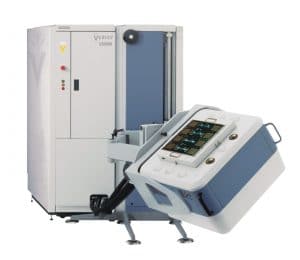
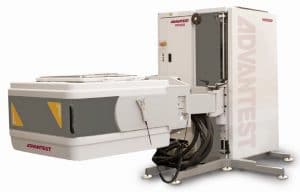
Legacy manufactures the leading line of semiconductor test process chillers for brands like Hewlett Packard, Agilent, Verigy, LTX Fusion, and more.
The Legacy Chillers value proposition: Each of our semi-conductor cooling chillers is specifically designed to meet the 24/7/365 demands of your semi application. Prior to shipment, each process chiller is load tested while undergoing a rigorous quality control process. Our process chiller control system provides all of the latest features the market demands. For more information on how Legacy Process Chiller products compare to many of the other chiller brands on the market have a look at our Process Chiller Buyer’s Guide, available for download.
To make your selection of the correct glycol process chiller easier, Legacy has developed OEM designs for many of the most common process chillers used for Brewery’s, Distillery’s and other Fermentation production. If you don’t see Glycol chiller for your specific requirement below, not to worry, we have dedicated process chiller application engineers available to assist you. Just give us a call at 877-988-5464.
Why Choose a Legacy Process Chiller for your Semiconductor Test Applications?
Semiconductor Test Process Chiller Statement of Value: Each of our fluid cooling systems are specifically designed to meet the 24/7/365 demands of this highly demanding, Mission Critical market. During production each, built to order, chiller undergoes rigorous quality control with extensive QC during and after final load testing.
Standard Features
Partial List for Glycol Cooling Applications
-> ETL listed US/C
-> Industrial trade PLC with high resolution touch screen.
-> Closed (SS) storage tank on with separate dedicated recirc pump.
-> Fused, STAINLESS STEEL Process pump w/ discharge ball valve.
-> STAINLESS STEEL, brazed plate evaporator.
-> Hot Gas Bypass Capacity Control.
-> Painted (Powder Coated), galvanized sheet metal cabinet.
-> Low ambient package rated down to 38F.
-> Dedicated recirculation pump proving temp stability to process.
-> QUICK SHIP program available.
-> Built in Web Server with data logging and email alerts.
-> Post metal production powder coat paint.
-> monitor/control from any web enabled device using any web browser.
-> Factory QC under lead prior to ship.
-> Machine bent tubing, 80% less brazed fittings.
-> MANUFACTURED IN THE USA!
-> QUICK SHIP AVAILABLE FOR MOST MODELS
Available Factory Options
Partial List for Glycol Applications
-> E-Coat coastal protection.
-> Low ambient control options down to -20F ambient.
-> Patented Economizer System that can reduce energy usage as much as 60%.
-> BacNet data communications TCP/IP or Serial.
-> Remote wall mounted touch screen.
-> Voltage and Phase monitoring and protection.
-> VFD lead compressor / PLC controlled.
-> VFD System pump / PLC Controlled.
-> VFD head pressure control (Air-Cooled Models).
-> Dual pump with auto changeover / auto lag lead.
-> Many system pump configurations to choose from.
-> Open vented storage tank as alternate to closed SS.
Process Cooling for Semiconductor Test Applications
Semiconductor test systems place demanding requirements on thermal applications. As test equipment becomes more sophisticated and semiconductor devices operate at higher speeds and power levels, the amount of heat generated at the test interface can become a significant operating challenge. That heat must be removed consistently without allowing process temperature to drift during a test cycle, as well as protecting the equipment in the process.
A dedicated process chiller provides a controlled source of cooling fluid that can be circulated directly through the thermal management system of the test equipment. Rather than relying on facility air conditioning or general-purpose building cooling, a process chiller is designed around the temperature, flow, and heat-removal requirements of the test application. This gives equipment designers and test engineers greater control over the thermal conditions surrounding the device under test and helps create a more stable environment for repeatable testing.
Why Temperature Stability Matters During Semiconductor Testing
Temperature can have a direct effect on semiconductor device characteristics. Changes in temperature can influence electrical performance, power consumption, timing, leakage, and other operating characteristics that may be evaluated during testing. When the thermal conditions surrounding the test hardware change unexpectedly, it can become more difficult to distinguish a device-related result from a temperature-related variation.
Process cooling helps establish a controlled thermal environment throughout the test process. The objective is not simply to produce cold fluid, but to deliver cooling at conditions appropriate for the equipment and maintain those conditions as the thermal load changes. Properly engineered fluid circulation can help absorb heat from the test system while minimizing temperature fluctuations between test cycles and during extended operation.
This becomes particularly important when testing is performed continuously or when a test platform is subjected to changing workloads. A cooling system that can respond to variations in heat load can provide more consistent process conditions than a system selected only on the basis of maximum cooling capacity.
Managing Variable Heat Loads
Semiconductor test equipment does not necessarily generate a constant amount of heat. The thermal load can change as test patterns, device configurations, operating conditions, or test sequences change. A chiller therefore needs to be evaluated not only for its maximum cooling requirement, but also for how effectively it can operate as the load moves above and below that point.
The process loop, pump configuration, thermal storage, controls, and refrigeration system can all influence how the chiller responds to these changing conditions. A properly configured system can help prevent large swings in process-fluid temperature when the test load changes rapidly.
For OEM test equipment manufacturers, this is especially important because the chiller becomes part of the overall equipment design. The cooling system needs to complement the thermal characteristics of the test platform rather than operate as an independent piece of facility equipment.
Matching Cooling to the Test System
There is no single cooling configuration that is ideal for every semiconductor test application. The right solution depends on the amount of heat being generated, required fluid temperature, required flow, allowable temperature variation, available installation space, ambient conditions, and the characteristics of the equipment being cooled.
Smaller or more localized test applications may benefit from a compact process cooling system dedicated to an individual piece of equipment. Larger test installations may require substantially greater cooling capacity or a configuration designed to serve multiple loads. OEM applications may have additional requirements involving physical dimensions, piping connections, controls integration, communications, or specialized operating conditions.
This is why chiller selection should begin with the application rather than with a particular chiller model. Understanding the actual process requirements allows the refrigeration system, pump, heat exchanger, controls, and other components to be selected as a complete cooling solution.
Air-Cooled Cooling for Semiconductor Test
Air-cooled process cooling can be useful when the test facility does not have a dedicated condenser-water system or when an independent heat-rejection system is preferred. The chiller removes heat from the process fluid and transfers that heat to the surrounding air.
For semiconductor test installations, this can simplify the facility-side requirements because the process cooling system does not depend on a separate cooling tower or condenser-water loop. Air-cooled systems can also be useful where an independently packaged cooling solution is desirable.
The key consideration is the environment in which the chiller will operate. Ambient temperature, available ventilation, installation location, and seasonal operating conditions can all affect heat rejection and overall chiller performance. These factors should be considered during system design rather than after the equipment has been selected.
Water-Cooled Cooling for Larger or Facility-Integrated Systems
Where a facility already has cooling-tower or condenser-water infrastructure, water-cooled process cooling can provide another approach to rejecting the heat removed from the semiconductor test equipment. Instead of transferring heat directly to ambient air, the chiller transfers process heat to the facility’s water system.
This configuration can be attractive for larger installations where facility infrastructure is already available or where space and heat-rejection requirements make water cooling advantageous. Water-cooled systems can also integrate naturally into facilities that already manage multiple industrial cooling loads through a central water system.
The important consideration is that the chiller becomes part of a larger thermal system. Condenser-water temperature, flow, water quality, seasonal conditions, and the characteristics of the facility cooling system all need to be considered when determining how the process chiller will perform.
Cooling Designed Around the OEM Equipment
For semiconductor equipment manufacturers, process cooling is often more than a utility requirement—it is part of the equipment architecture. The chiller may need to communicate with the test platform, respond to operating commands, provide status information, or fit within specific physical and electrical constraints.
An application-specific approach allows the cooling system to be considered alongside the equipment it supports. Process-fluid connections, pump performance, temperature control, reservoir requirements, communications, alarms, and other system characteristics can be evaluated as part of the overall design.
This approach is particularly valuable when a test platform will be manufactured repeatedly. A cooling system that has been properly integrated into the original equipment design can simplify installation and commissioning while providing a consistent thermal-management solution across multiple installations.
Designing for Continuous Test Operation
Semiconductor testing can represent a significant capital investment in equipment, facilities, and engineering resources. The cooling system supporting that equipment therefore needs to be considered in terms of the entire operating environment—not simply its initial purchase price.
A process chiller that is properly matched to the application can help provide consistent cooling over extended operating periods while giving operators visibility into important system conditions. The goal is to make the cooling system a dependable part of the test platform rather than a limiting factor on its operation.
For mission-critical applications, system design should also consider what happens when conditions change or a component requires attention. Monitoring, alarms, appropriate control logic, and carefully selected system components can give operators better visibility into cooling performance and provide an opportunity to address abnormal conditions before they affect the test process.
Engineering the Cooling System Around the Application
Semiconductor test applications can vary considerably from one platform to another, which is why Legacy approaches process cooling as an application-engineering problem rather than simply a product selection exercise.
When evaluating a semiconductor test cooling system, one of Legacy’s engineers can work with the customer to understand the process heat load, desired supply temperature, required flow, fluid characteristics, environmental conditions, installation requirements, and equipment interface. Those requirements can then be used to develop a cooling configuration appropriate for the application.
Whether the requirement involves a dedicated test platform, an OEM equipment design, a production test environment, or a larger semiconductor facility, the objective is the same: provide dependable thermal management that supports the performance and operating requirements of the equipment.
Talk With a Process Cooling Engineer
If you are developing or upgrading a semiconductor test system, Legacy Chillers can help evaluate the cooling requirements before a chiller is specified. Providing the expected heat load, fluid temperature, flow requirements, ambient conditions, and available facility infrastructure gives our engineers the information needed to determine an appropriate process cooling approach.
Rather than starting with an outdated model number or capacity table, start with the requirements of your test process. Legacy can help develop the cooling solution around those requirements.